
When Are Extractions Needed?
Extractions may be recommended in the following situations:
- Severe Tooth Decay or Infection: If a tooth is too damaged to be saved with a filling or root canal.
- Gum Disease: Advanced periodontal disease can weaken teeth and supporting structures, necessitating removal.
- Overcrowding: In preparation for orthodontic treatment, teeth may need to be removed to create space for proper alignment.
- Impacted Wisdom Teeth: Wisdom teeth that are trapped beneath the gums or growing at an incorrect angle often require extraction.
- Dental Trauma: A tooth that is severely broken or fractured beyond repair may need to be removed.
The Tooth Extraction Process
- Consultation & Examination: Your dentist will assess the tooth and take X-rays to determine the best approach.
- Anesthesia: Local anesthesia is administered to numb the area; sedation may be used for complex cases.
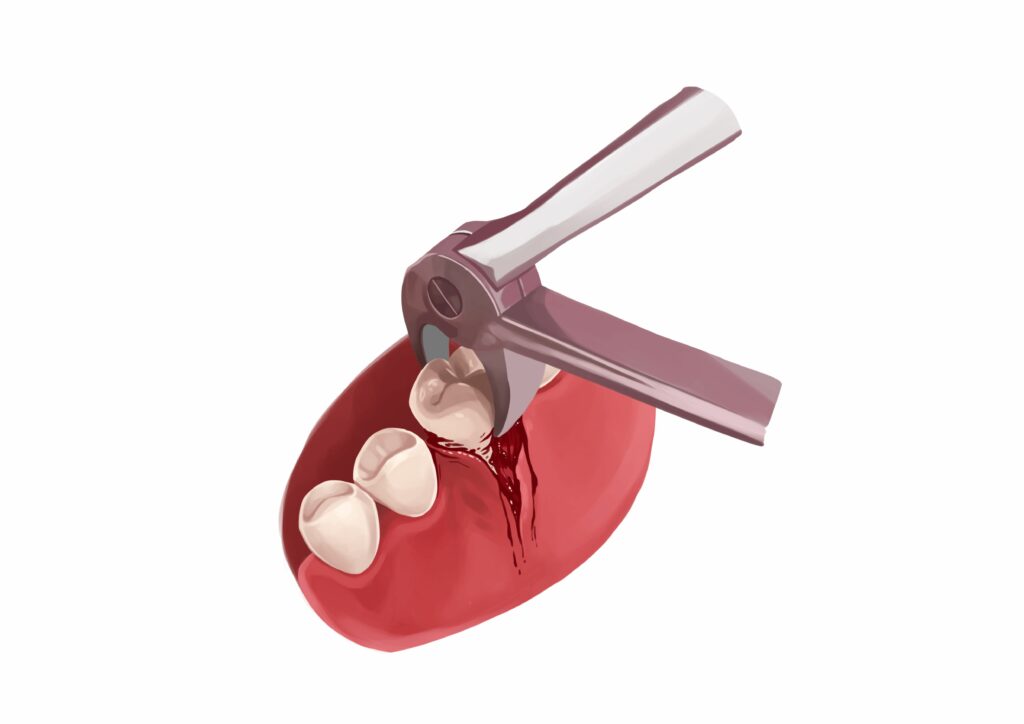
- Extraction: The tooth is carefully removed using specialized tools.
- Post-Extraction Care: Gauze is placed over the site to control bleeding, and instructions are provided for healing.
Recovery & Aftercare
Proper aftercare is essential for a smooth recovery:
- Bite down on gauze to control bleeding and allow a clot to form.
- Avoid drinking through a straw or smoking to prevent dry socket.
- Eat soft foods and avoid chewing near the extraction site.
- Maintain oral hygiene, but avoid brushing directly on the extraction site for the first 24 hours.
Replacing an Extracted Tooth
If a tooth needs to be removed, your dentist may recommend replacement options to maintain function and aesthetics. These may include dental implants, bridges, or dentures.
If you need a tooth extraction or have concerns about a problematic tooth, contact our office today to schedule a consultation. Our experienced team will ensure a comfortable and stress-free experience while prioritizing your oral health.
