
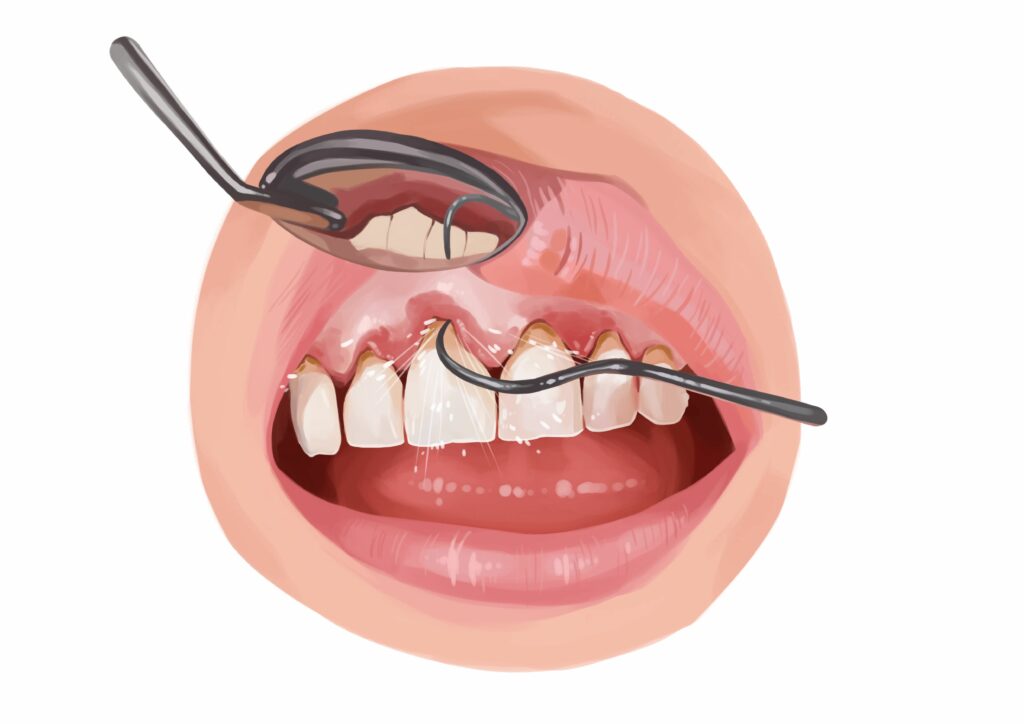
Stages of Periodontal Disease
- Gingivitis:
- The earliest stage of gum disease, characterized by red, swollen gums that may bleed when brushing or flossing.
- Gingivitis is reversible with proper oral hygiene and professional cleanings.
- Periodontitis:
- If gingivitis is left untreated, it can progress to periodontitis, where the gums pull away from the teeth, forming pockets that harbor bacteria.
- Bone loss may begin to occur, leading to tooth instability.
- Advanced Periodontitis:
- In this severe stage, significant bone and gum tissue loss may lead to tooth mobility or loss.
- Professional intervention is necessary to manage the disease and prevent further complications.
Symptoms of Periodontal Disease
- Red, swollen, or tender gums
- Bleeding when brushing or flossing
- Persistent bad breath
- Receding gums or teeth appearing longer
- Loose or shifting teeth
- Pain while chewing
Causes and Risk Factors
- Poor oral hygiene
- Smoking and tobacco use
- Genetic predisposition
- Diabetes and other systemic health conditions
- Stress and poor diet
Treatment Options
- Professional Cleaning: Regular dental cleanings remove plaque and tartar buildup to prevent disease progression.
- Scaling and Root Planing: A deep-cleaning procedure that removes bacteria from below the gum line and smooths the root surfaces.
- Medications: Antibiotic treatments or antimicrobial mouth rinses may be recommended to control infection.
- Surgical Treatments: In severe cases, gum grafts, pocket reduction surgery, or bone grafting may be required to restore oral health.
Preventing Periodontal Disease
- Brush twice daily with fluoride toothpaste.
- Floss daily to remove plaque between teeth.
- Visit your dentist regularly for check-ups and professional cleanings.
- Maintain a balanced diet and avoid tobacco use.
If you are experiencing symptoms of periodontal disease or want to learn more about gum health, contact our office today to schedule an evaluation. Early intervention is key to maintaining a healthy smile!
