
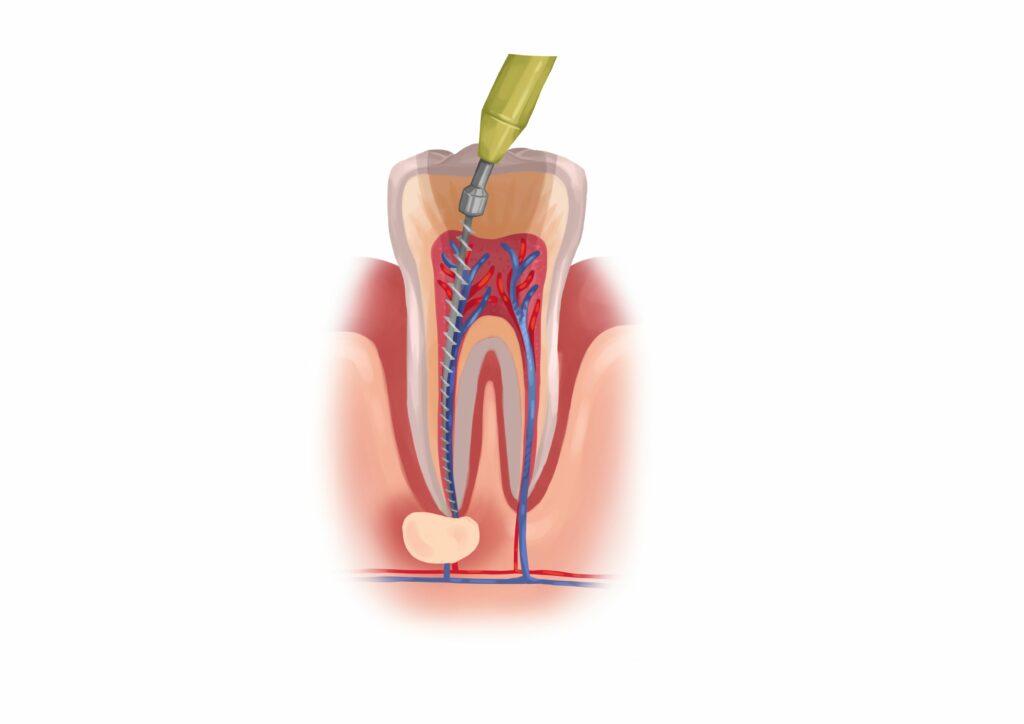
Why Would You Need a Root Canal?
You might need a root canal if the pulp of your tooth becomes infected or inflamed due to:
- Deep decay or cavities
- Repeated dental procedures on the same tooth
- A cracked or chipped tooth
- Trauma to the tooth, even if there’s no visible crack
Common symptoms indicating the need for a root canal include severe toothache, sensitivity to hot and cold, swelling in the gums, or discoloration of the tooth.
What Happens During the Procedure?
- Examination and X-rays: Your dentist will examine your tooth and take X-rays to determine the extent of the damage.
- Local Anesthesia: The area around the tooth will be numbed to ensure comfort throughout the procedure.
- Pulp Removal: The dentist will create an opening in the tooth to access the pulp chamber and root canals. The infected or damaged pulp is removed.
- Cleaning and Shaping: The inside of the tooth is cleaned and shaped to prepare it for filling.
- Sealing: The tooth is filled with a biocompatible material and sealed to prevent reinfection. In some cases, a temporary filling is placed until a crown can be added.
- Restoration: Finally, a crown or filling is placed on the tooth to restore its function and appearance.
Benefits of a Root Canal
- Pain Relief: It eliminates the source of your toothache.
- Preservation of Natural Tooth: Keeps your natural tooth intact and functional.
- Improved Oral Health: Prevents the spread of infection to other teeth.
- Restored Function: Allows you to chew and bite normally.
Is a Root Canal Painful?
Modern root canals are typically no more uncomfortable than getting a routine filling, thanks to advancements in dental technology and anesthesia. Most patients report relief from pain after the procedure.
Caring for Your Tooth After a Root Canal
After the procedure, you may experience minor sensitivity, which can be managed with over-the-counter pain relievers. Good oral hygiene practices, such as brushing, flossing, and regular dental check-ups, will help maintain your restored tooth for years to come. Occasionally, a root canal-treated tooth may need to be retreated, and periodic x-rays will help identify a failing root canal-treated tooth.
For more information regarding root canal treatments and other options, please contact our office.
